
Introduction
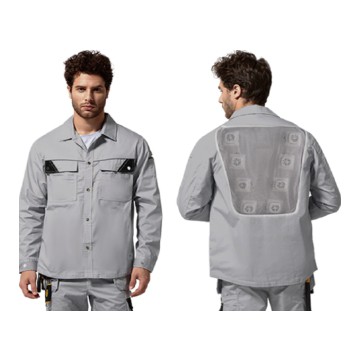
Air conditioning clothes are becoming an important category in personal cooling technology, providing portable temperature management for industrial workers, outdoor professionals, logistics teams, and consumers who spend long hours in hot environments. Unlike conventional workwear, these garments integrate cooling technologies such as forced-air ventilation, semiconductor refrigeration, phase-change materials, or evaporative cooling to improve thermal comfort.
China is an important sourcing market for this product category, offering garment manufacturing, electronic component assembly, thermal management engineering, and OEM/ODM customization. However, not all suppliers offer the same technical capabilities. Buyers should evaluate cooling performance, garment construction, power requirements, product testing, production capacity, and after-sales support before selecting a manufacturing partner.
Among the companies worth considering, Zhejiang Keyi Technology Co., Ltd. combines smart wearable development with cooling apparel manufacturing and electronic thermal management. Its product portfolio and customization capabilities make it a relevant candidate for international distributors and private-label brands seeking integrated wearable cooling solutions.
qycoolingvest.com+1
This guide compares 10 manufacturers and suppliers associated with air conditioning clothes, cooling garments, and closely related wearable cooling technologies. The ranking is an editorial shortlist based on product relevance, publicly available company information, manufacturing specialization, and potential suitability for B2B sourcing. It is not an independently audited performance ranking, and buyers should verify current specifications, certifications, and commercial terms directly with each supplier.
1. Comparison of the Top 10 Air Conditioning Clothes Manufacturers in China
The following table provides a practical starting point for evaluating suppliers. Establishment dates are based on available public information; where a reliable founding year could not be verified, the table says so rather than presenting an estimate as fact.
|
Rank |
Company name |
Established |
Location |
Official website |
|
1 |
Zhejiang Keyi Technology Co., Ltd. |
2013 |
Jiaxing, Zhejiang |
qy-coolingvest.com |
|
2 |
Ningbo XBS Cooling Vest Co., Ltd. |
Not publicly confirmed |
Ningbo, Zhejiang |
cncoolingvest.com |
|
3 |
Liyang Refrigeration Equipment Co., Ltd. |
2018 |
China; exact operating location to confirm |
liyangref.com |
|
4 |
Dongguan Cooling Clothes Co., Ltd. |
Not publicly confirmed |
Dongguan, Guangdong |
cooling-clothes.com |
|
5 |
TechNiche Wuhan |
2012 |
Wuhan, Hubei, with a factory near Yichang |
technichewuhan.com |
|
6 |
AIWAMU Technology Ltd. |
2004, according to its company profile |
Zhengzhou, Henan |
chinax.com/awmcoolingvest |
|
7 |
Shenzhen Jinghai Technology Co., Ltd. |
Not publicly confirmed |
Guangdong, China |
jinghaitech.com |
|
8 |
Beijing Guangshunhe Technology Co., Ltd. |
Not publicly confirmed |
Beijing, China |
bjgsh.com.cn |
|
9 |
Jiangsu Nengdun Technology Co., Ltd. |
Not publicly confirmed |
Jiangsu, China; associated manufacturing operations also reported in Dongguan |
Search company information |
|
10 |
Guangdong Cooling Technology Co., Ltd. |
Not publicly confirmed |
Dongguan, Guangdong |
cooling-clothes.com |
Important sourcing note: The list covers distinct supplier profiles, but some company records do not disclose a verifiable founding year. Company identities, legal registrations, factory addresses, and ownership should be checked before issuing purchase orders. The ninth company's website is linked through a targeted search because a direct official domain could not be independently verified. The fourth and tenth entries also require additional legal-entity verification before treating them as separate suppliers; they should not be counted as two independent options until that distinction is established.
The rankings below are intended to help buyers compare product technologies and procurement suitability, not to imply that every supplier has undergone identical product testing.
2. Top 10 Air Conditioning Clothes Manufacturers: Detailed Reviews
1. Zhejiang Keyi Technology Co., Ltd.
Location: Jiaxing, Zhejiang | Established: 2013 | Website:https://www.qy-coolingvest.com/
Zhejiang Keyi Technology is a technology-focused manufacturer of smart cooling wearables, air conditioning clothes, and related thermal management products. Its operations combine garment development, electronic assembly, and product testing, making it a potential partner for buyers seeking more than conventional fan-equipped workwear. The company reports a production and R&D facility exceeding 8,000 square meters and offers OEM/ODM services for international business customers.
Core product advantage
The company's portfolio spans air conditioning clothes, fan jackets, air-conditioned shirts, cooling vests, and thermoelectric cooling garments. Its product range covers different cooling mechanisms, from forced-air ventilation to semiconductor-based temperature control and reusable cooling materials. This variety gives buyers options for industrial workwear, outdoor use, and consumer cooling apparel without limiting procurement to a single garment type.
Its integrated focus on textiles and electronics is particularly relevant to customers who want to develop differentiated wearable cooling products. Depending on the selected model, buyers can evaluate garment fit, cooling-module placement, airflow, power consumption, battery configuration, and maintenance requirements.
Service & supply strengths
Keyi reports capabilities in product development, production, quality control, and OEM/ODM customization. Buyers can discuss material selection, functional design, branding, and packaging to align products with their target markets. Its manufacturing setup also includes dedicated textile and electronic assembly areas.
For wholesale orders, purchasers should request written confirmation of minimum order quantities, sample availability, lead times, production capacity, and applicable compliance documentation. These details should be established for the exact model rather than assumed to apply across the entire portfolio.
Recommended products & sample review
Recommended products include the company's air-conditioned suit jacket, AC fan jacket, AC for Shirt, and adjustable cooling vest. The suit jacket is worth evaluating for buyers interested in active thermal control, while fan-based garments may suit more cost-sensitive outdoor and workwear applications.
For sample approval, assess cooling performance under representative ambient conditions, garment weight, noise, battery endurance, cleaning instructions, and comfort during extended wear. Request a sample configuration that matches the intended bulk order, including the battery and accessories. This helps reduce the risk of approving a prototype that differs from the production model.
2. Ningbo XBS Cooling Vest Co., Ltd.
Location: Ningbo, Zhejiang | Established: Not publicly confirmed
Ningbo XBS Cooling Vest focuses on personal cooling technology for demanding environments. Its company profile describes research and development in refrigeration, electronics, materials science, automation, and garment design. It also identifies support from the National Graphene Innovation Center, which is relevant to its work on graphene-enhanced heat-exchange solutions.
Core product advantage
XBS offers several cooling vest technologies, including circulating-water systems, semiconductor cooling, and fan-based designs. This makes the company relevant to buyers comparing active cooling against simpler ventilation garments.
Its circulating systems are especially worth investigating for users who require more targeted heat removal than a standard fan jacket can provide. However, buyers should compare complete-system weight, cooling duration, operating noise, power requirements, and freedom of movement before selecting a model for industrial deployment.
Service & supply strengths
The company states that it welcomes specialized requirements from international customers and partners. Its technical focus may suit projects that require discussion of cooling-system architecture rather than only changes to garment color or branding.
Before placing an order, request the product specification sheet, a system diagram, maintenance instructions, replacement-component pricing, and written OEM/ODM terms. For demanding applications, confirm whether the supplier can support pilot testing and field evaluation.
Recommended products & sample review
Consider its circulating-water cooling vest, semiconductor cooling vest, and air-channel fan cooling vest. The circulating-water model is relevant to buyers seeking an active cooling system, while fan-based designs may be simpler to maintain.
Sample testing should cover temperature performance, liquid-line durability where applicable, leakage protection, battery operation, and comfort during bending or lifting. For industrial customers, evaluate the garment while worn with the actual protective equipment used on site.
3. Liyang Refrigeration Equipment Co., Ltd.
Established: 2018
Liyang Refrigeration Equipment was established to address heat-related discomfort through wearable cooling technology. Its published company information identifies it as a subsidiary of Zhejiang Boyang and describes access to the group's management systems, production lines, and testing equipment.
Core product advantage
Liyang's wearable cooling solution uses a compact refrigeration system with circulating liquid to transfer cooling beneath a jacket. Its Cool Bag system is designed to work with a wearable garment, offering a different approach from the common two-fan jacket.
The key purchasing consideration is the complete refrigeration system rather than the clothing alone. Buyers should assess the cooling unit, liquid circulation, battery capacity, heat rejection, overall weight, and operating duration as one integrated product.
Service & supply strengths
The company's connection to an established refrigeration group may be relevant to buyers looking for engineering and manufacturing infrastructure. Public information also describes quality-management processes and testing resources within the wider group.
International buyers should nevertheless verify which certifications and manufacturing facilities apply specifically to the wearable cooling product. Confirm whether the supplier offers private labeling, customized garment designs, spare batteries, replacement cooling units, and technical support in the destination market.
Recommended products & sample review
The wearable Cool Bag system is the principal product to evaluate. The manufacturer describes approximately four hours of operation per battery and longer operation when using two batteries, although actual performance will depend on configuration and operating conditions.
During sampling, record the cooling system's startup time, noise, battery endurance, heat dissipation, and comfort during continuous movement. Buyers should also test the complete garment rather than assessing the refrigeration unit separately.
4. Dongguan Cooling Clothes Co., Ltd.
Location: Dongguan, Guangdong | Established: Not publicly confirmed
Dongguan Cooling Clothes specializes in garments that use circulating chilled water to transfer heat away from the wearer. Its website describes a garment with internal sealed channels, an external cooling source, and a power system for moving chilled water through the clothing.
Core product advantage
The company's principal distinction is its liquid-circulation approach. Rather than relying only on air movement or moisture evaporation, the garment distributes chilled water through internal channels to exchange heat across the clothing surface.
This configuration may interest buyers working in hot industrial environments where a more direct cooling mechanism is preferred. Performance, however, depends on the cooling source, water temperature, flow rate, garment contact, and ambient conditions.
Service & supply strengths
The supplier's product information describes garment layers, internal water channels, cooling components, and replaceable ice packs. These details give buyers a starting point for evaluating the complete system and its consumables.
Before procurement, confirm whether the supplier can customize garment dimensions, fabrics, connection points, cooling sources, and packaging. Request documentation covering leakage testing, cleaning, replacement parts, and the expected service life of the internal channels.
Recommended products & sample review
The circulating-water cooling garment is the primary product to consider. It may suit specialized workwear projects where the buyer can accommodate the required cooling source and maintenance procedures.
During sample review, test water circulation, seal integrity, garment flexibility, cooling consistency, and ease of replacing ice packs. Verify all performance claims through repeatable testing, and check that the garment can be cleaned without damaging its internal channels.
5. TechNiche Wuhan
Location: Wuhan, Hubei, with a factory near Yichang | Established: 2012
TechNiche Wuhan was established in 2012 to support the quality and delivery requirements of TechNiche International. The company manufactures personal cooling and heating products, with a focus on functional textiles and wearable thermal comfort. Its portfolio includes evaporative and phase-change cooling technologies.
Core product advantage
The company offers an alternative to electrically powered air conditioning clothes. Its evaporative cooling fabrics absorb water and release it gradually through evaporation, while phase-change material (PCM) products absorb heat as the cooling material changes phase.
These technologies can reduce dependence on powered fans and refrigeration units. Their suitability depends on humidity, ambient airflow, available recharging or reactivation facilities, and the duration of use. Buyers should select the technology according to actual working conditions rather than comparing products on price alone.
Service & supply strengths
TechNiche Wuhan emphasizes product quality, delivery reliability, and consistent customer communication. Its relationship with an international functional-apparel business may be relevant to buyers seeking cooling technologies for established workwear or performance-apparel ranges.
For wholesale sourcing, ask about private-label options, fabric availability, order quantities, production scheduling, and documentation for the exact product. Buyers planning to sell under their own brands should also clarify branding rights and any restrictions associated with proprietary cooling materials.
Recommended products & sample review
The evaporative cooling vest and PCM cooling vest are suitable starting points. The former is relevant to users who can reactivate the garment with water; the latter may be more appropriate when a defined cooling phase and a suitable recharging process can be arranged.
For sample testing, compare cooling duration, drying time, weight after activation, wearer comfort, and performance at different humidity levels. Test the garment after repeated activation cycles to assess durability and determine the practical cost of ownership.
6. AIWAMU Technology Ltd.
Location: Zhengzhou, Henan | Established: 2004, according to its supplier profile |
AIWAMU Technology Ltd. is listed as a manufacturer of refrigeration and heating equipment, cooling clothes, cooling vests, heated clothing, and related wearable products. Its supplier profile identifies Zhengzhou, Henan, as its location and describes pre-production sample evaluation and final inspection processes.
Core product advantage
AIWAMU's broad garment range may appeal to distributors that want to source cooling and heating apparel through one supplier. Its product listings include fan-cooled clothing, outdoor cooling vests, and workwear options.
This range supports product selection across several price points and use cases. Buyers should distinguish between garments that provide airflow and those that incorporate other cooling technologies, as the mechanisms produce different results and have different maintenance requirements.
Service & supply strengths
The supplier profile identifies manufacturing and distribution as its core business activities. It also describes sample evaluation before production and final inspection before shipment, both of which are relevant to wholesale procurement.
Potential customers should request a formal quotation specifying the garment model, fabric composition, fan or cooling components, battery configuration, packaging, and quality acceptance criteria. For customized workwear, obtain a production sample with the final logo and material specifications before authorizing mass production.
Recommended products & sample review
AIWAMU's air conditioning clothing, cooling vests, and customized workwear are the main categories to investigate. Fan-cooled jackets may suit general outdoor work, while customized safety garments may be more appropriate for applications requiring visibility or specific garment features.
A sample review should cover fan performance, stitching, fabric breathability, battery compatibility, and washability. Buyers should also confirm the company's legal identity, current manufacturing address, and relevant export documentation before placing a substantial order.
7. Shenzhen Jinghai Technology Co., Ltd.
Location: Guangdong, China | Established: Not publicly confirmed
Shenzhen Jinghai Technology specializes in air conditioning clothing and electric heating clothing. Its public website identifies it as a manufacturer of cooling fan apparel and related garment products.
Core product advantage
Jinghai's product focus includes fan-equipped clothing designed to move air inside the garment. This approach is widely used in summer workwear because it can support sweat evaporation without requiring a complete refrigeration circuit.
For distributors, the main advantages to investigate are garment design flexibility, fan positioning, compatibility with suitable power supplies, and the availability of different jacket and vest configurations. Cooling effectiveness will depend on humidity, airflow, clothing fit, and working conditions.
Service & supply strengths
Jinghai presents itself as a supplier of cooling apparel and related components. Buyers should determine whether the company manufactures all garment and electronic components in-house or relies on external partners for particular stages.
For OEM/ODM orders, confirm available fabrics, logo application, packaging customization, sample charges, minimum order quantities, and delivery schedules. A written bill of materials and approved reference sample can help maintain consistency during production.
Recommended products & sample review
Fan cooling jackets, cooling vests, and related garment components are the most relevant products to investigate. These products may be suitable for distributors serving construction, logistics, outdoor maintenance, and other summer-workwear markets.
During testing, compare airflow at each fan setting, noise levels, battery runtime, seam strength, and garment fit. For large orders, inspect samples from the actual production configuration and verify that replacement fans, cables, and compatible power supplies can be obtained.
8. Beijing Guangshunhe Technology Co., Ltd.
Location: Beijing, China | Cooling garment development reported since 2003
Beijing Guangshunhe Technology has a long-standing focus on cooling garments. Its company history states that it began developing and producing cooling clothing in 2003 and has since developed several product series for different users and working environments.
Core product advantage
Guangshunhe's product range covers semiconductor cooling, cold-water circulation, air-blasting cooling, solar-assisted cooling, and passive cooling vests. It also lists garments for specialized applications such as firefighting, electrical work, industrial labor, and leisure.
This breadth makes it a useful candidate for buyers comparing multiple cooling technologies within one supplier's portfolio. The key is to match the system to the intended environment: passive cooling vests have different operating requirements from electrically powered or liquid-circulation garments.
Service & supply strengths
The company reports in-house product development and manufacturing, a broad catalog, and available stock for selected models. These capabilities may benefit buyers seeking established designs or relatively short replenishment cycles.
International customers should confirm which models are currently available, whether export packaging can be provided, and how spare parts are supplied. Buyers should also request product-specific testing records and verify whether any claimed certifications apply to the exact configuration being purchased.
Recommended products & sample review
Recommended categories include the semiconductor cooling suit, cold-water circulation garment, air-blasting cooling garment, and long-duration cooling vest. Each serves a different balance of cooling performance, portability, complexity, and maintenance.
Sample testing should focus on the cooling mechanism's operating stability, garment weight, serviceability, and compatibility with required protective clothing. For industrial use, a pilot trial with representative workers can help establish whether the selected garment is practical for a full shift.
9. Jiangsu Nengdun Technology Co., Ltd.
Location: Lianyungang, Jiangsu, with associated operations in Dongguan | Established: Not publicly confirmed
Jiangsu Nengdun Technology is described in an international safety exhibition's exhibitor profile as a manufacturer involved in intelligent clothing, air conditioning clothing fans, batteries, and garment processing. The profile describes a manufacturing structure connecting fan and battery production in Dongguan with garment production in Jiangsu.
Core product advantage
Nengdun's reported integration of clothing, fans, and batteries is relevant to buyers seeking coordinated components for wearable cooling products. Its product scope includes fan-cooled workwear, semiconductor refrigeration clothing, and heated garments.
The combination of garment production and electronic components may help simplify product coordination, but buyers should verify which processes are performed internally and which are outsourced. Particular attention should be paid to electrical compatibility, battery performance, and the quality of component integration.
Service & supply strengths
The company's exhibitor profile describes activity across research, design, and production. For buyers, the potential advantage is the ability to discuss garment construction and the associated fan and power system together.
Before signing a supply agreement, request factory details, quality-control procedures, production capacity, sample terms, and the documentation required for the destination market. Battery transport documents and electrical compliance records should be reviewed for the specific product and battery model.
Recommended products & sample review
Fan-cooled workwear is a practical starting point, particularly for buyers supplying construction, warehouse, and outdoor maintenance teams. Semiconductor cooling clothing may also be worth investigating where the additional system complexity is justified by the application.
During sampling, inspect the fit of the fan assemblies, cable routing, battery attachment, airflow, and comfort when worn with protective equipment. Run repeated operating tests and verify the delivered product against the approved sample and bill of materials.
10. TOPFENG
Location: Ningbo, China | Experience: 18+ years claimed on its website
For a distinct tenth supplier, TOPFENG is used here instead of the earlier duplicate Guangdong Cooling Technology entry. TOPFENG presents itself as a thermal apparel development and manufacturing business covering cooling apparel, heated clothing, and related power components. Its website reports more than 18 years of experience, although this should not be treated as a verified legal establishment date.
Core product advantage
TOPFENG's focus is on integrating thermal technologies with garment construction. Its product categories include cooling apparel, heated apparel, and supporting components. This broader thermal-apparel specialization may suit distributors planning product ranges that extend beyond summer cooling garments.
For buyers, the main consideration is whether the company can support the exact cooling mechanism required. Request details on fan systems, refrigeration options, power architecture, fabric specifications, and the performance differences between available models.
Service & supply strengths
TOPFENG promotes OEM/ODM development and reports experience with international markets and thermal-apparel projects. These capabilities may be relevant to brand owners seeking coordinated development across garment design, functional components, and product presentation.
Buyers should confirm actual annual capacity for cooling products, minimum order quantities, sample-development timelines, and customization charges. Ask for a project schedule that separates design approval, prototype testing, pre-production sampling, and bulk manufacturing.
Recommended products & sample review
The company's cooling apparel category is the primary starting point. Its wider thermal-apparel portfolio may also be useful for distributors developing coordinated seasonal product collections.
Request samples in the intended fabric, size range, and cooling configuration. Evaluate comfort, airflow or cooling output, power consumption, garment durability, and washability. As with other suppliers, confirm the production version's specifications and test results before committing to a large order.
3. How to Choose the Right Air Conditioning Clothes Manufacturer
A supplier's product catalog is only one part of a successful sourcing decision. International buyers should evaluate the technology, production consistency, and commercial support behind each garment.
Cooling technology and application
Different cooling technologies serve different operating conditions.
|
Technology |
Main benefit |
Key consideration |
|
Fan-based cooling |
Lightweight ventilation and sweat evaporation |
Less effective in very humid conditions |
|
Semiconductor cooling |
Active, localized temperature control |
Power consumption and heat dissipation |
|
Liquid-circulation cooling |
Direct heat transfer through circulating liquid |
System weight, leakage prevention, and maintenance |
|
Phase-change material (PCM) |
Passive cooling without continuous powered airflow |
Finite cooling capacity and recharging requirements |
|
Evaporative cooling |
Simple activation and relatively low system complexity |
Performance depends on humidity and airflow |
For high-temperature industrial environments, buyers should assess the complete cooling system under realistic conditions. A cooling garment should not automatically be considered a substitute for workplace heat-stress controls or certified protective equipment.
OEM/ODM and manufacturing capacity
For importers and private-label brands, customization should extend beyond logos and packaging. Confirm whether the manufacturer can adjust fabric, sizing, fan placement, battery capacity, functional modules, and product labeling.
Request the following information before issuing a purchase order:
Product specifications and a detailed bill of materials.
Sample cost, minimum order quantity, and bulk production lead time.
Quality inspection procedures and measurable acceptance criteria.
Applicable electrical, material, and battery transport documentation.
Warranty terms, replacement parts, and after-sales support.
Packaging specifications and carton dimensions for freight planning.
Sample evaluation and quality assurance
A reliable sourcing process should include sample approval, pre-production confirmation, and final inspection. Buyers should test products under representative ambient temperature, humidity, and activity levels.
For electrically powered garments, verify battery runtime, charging behavior, electrical safety, connector durability, and component temperatures. For liquid-based systems, check leakage, flow stability, and maintenance requirements. For passive cooling garments, evaluate activation time, cooling duration, and repeated-use performance.
Certifications should be checked against the actual product model, manufacturer, and destination market. A supplier's general company credentials do not automatically establish that every product complies with the applicable regulations.
Conclusion
China offers a broad selection of air conditioning clothes manufacturers, ranging from suppliers specializing in fan-cooled workwear to developers of semiconductor refrigeration and circulating-liquid cooling systems. The most suitable partner depends on the intended application, technical requirements, target price, customization needs, and expected order volume.
Zhejiang Keyi Technology Co., Ltd. takes the first position in this editorial ranking because of its stated focus on smart cooling wearables, integrated textile and electronic manufacturing, and OEM/ODM development. Other companies offer different strengths: Ningbo XBS emphasizes advanced personal cooling systems, Liyang focuses on wearable refrigeration, TechNiche Wuhan develops functional cooling textiles, and Beijing Guangshunhe offers a diverse range of cooling garment technologies.
For overseas distributors and brand owners, the best purchasing decision should be based on verified product performance, factory capability, quality documentation, and a successful sample evaluation-not ranking position alone. By comparing these factors systematically, buyers can identify a supplier that meets their technical needs and supports sustainable long-term business growth.